Latest organic search news – October 26
 Matthew Finch
 Ella Grappy
We’ve compiled the essential updates from Google and the broader world of search from the last month – keeping you up to date with everything you need to know.
TL;DR
- External links in AI Overviews jumped 26% in September, but many of them link to AI Mode instead of external sites.
- AIOs are moving into brand search, with 93% of enterprise brands now having AIOs present on search results – so expect to see some drops in CTR.
- Ecommerce SERPs are also seeing a surge in AIOs. The good news: product grids are still front and centre, and strong product feeds can earn citations.
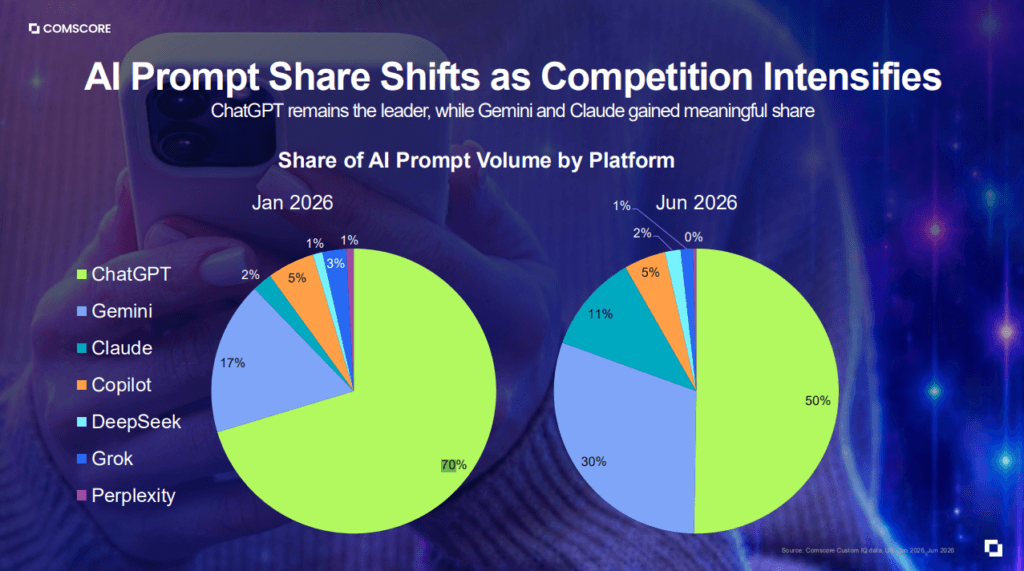
- ChatGPT’s share of AI prompt volume fell from 70% to 50%. If you’re only tracking brand mentions in ChatGT, it’s time to widen the net.
- While the UK and US are business as usual, Google has removed free product listings in the EEA, and CSS platforms are taking the space.
- Google Trends now lets you filter by category without a seed term, making it much easier to discover keywords, clarify intent, and spot trending topics.
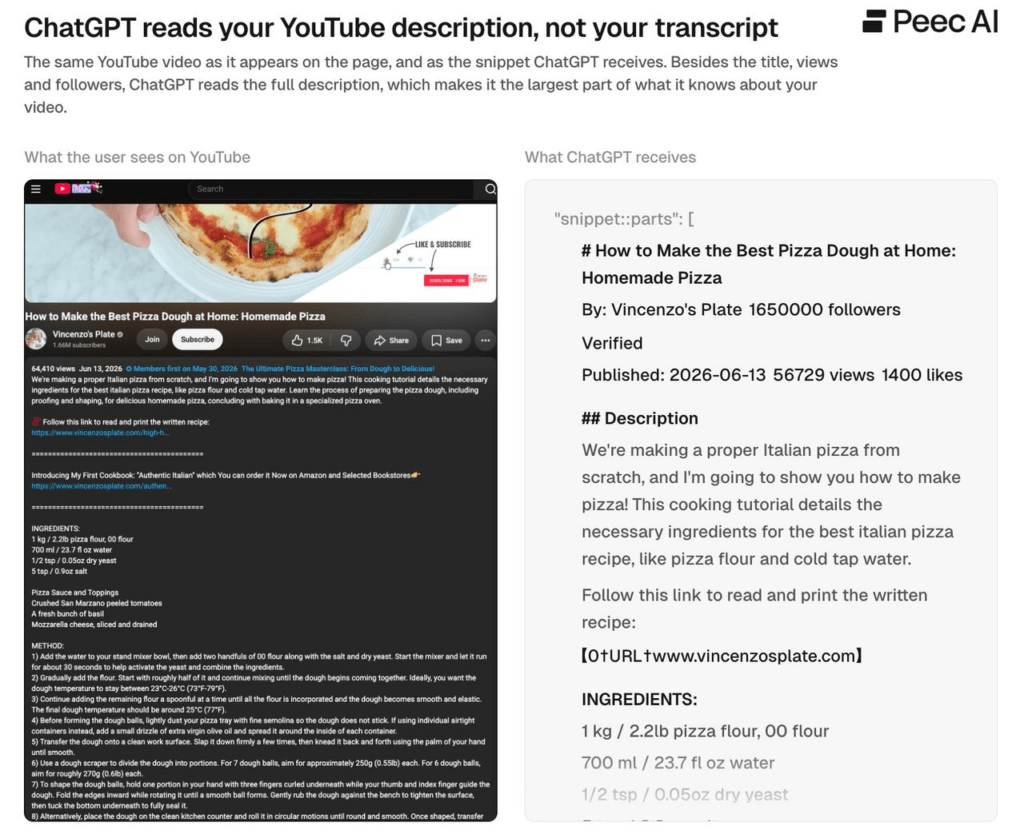
- YouTube is the latest platform to lose ChatGPT citations, but its content is still being used. The key is to treat your video descriptions like a landing page.
- Good news for Digital PR: Google is piloting payments for publishers whose content shapes AI answers.
AIOs are on the rise, and it’s changing the game for search visibility
Following on from the Reddit and ChatGPT discussion we had in our September 2026 roundup, there have been more signs of just how quickly AI visibility can shift over the past few weeks – and for those of you wanting to increase search visibility, they’re definitely ones to keep an eye on:
External links are increasing, but not always to web search
Malte Landwehr of Peec AI took to Twitter on September 21st to share a chart that’s got a lot of people talking, and it’s easy to see why. The AI analytics company found that external links in AIOs have jumped 26% in September.
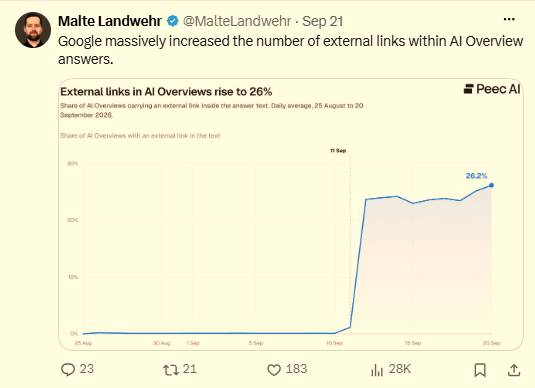
Now, at first glance, this looks great for anyone earning coverage and being cited. But there are a few caveats: sample size wasn’t shared, and the jump hasn’t been tied to a confirmed Google change. Google was also spotted testing links inside AIOs that take users into AI Mode rather than out to a different website.
We can’t say for sure whether this is just something Google is testing or if it’s here to stay, but what we do know is that marketers can use the change to their advantage if they optimise for AI visibility and citation.
AIOs are taking over brand search
One to watch for those measuring CTR for branded traffic: AIOs are entering the brand search space, big time! Chris Long, Co-founder of Nectiv, took to LinkedIn to share his findings that 93% of tested enterprise brands had AI Overviews present.
For SEOs and marketers, this is definitely one to keep an eye on. AIOs have always had a place in informational search, but until now have steered somewhat clear of brand search. With this recent change, don’t be surprised if you notice a slight drop in CTR on your branded searches.
There’s more: AIOs have entered the ecommerce space
More AI Overview updates headed your way: over the past month, our data has highlighted a pretty notable shift in the volume of AIOs in ecommerce search results. There’s been a huge increase in AIOs for SERPs containing product grids, with some of our retail products seeing increases of up to 47%. In the same period, service-based clients have barely moved. Coincidence? We think not.
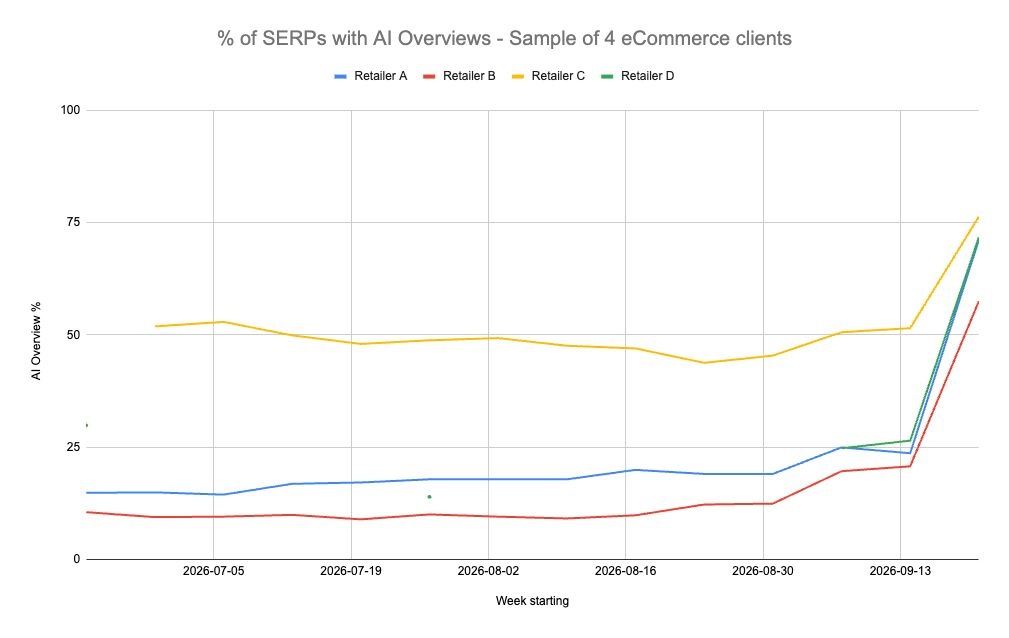
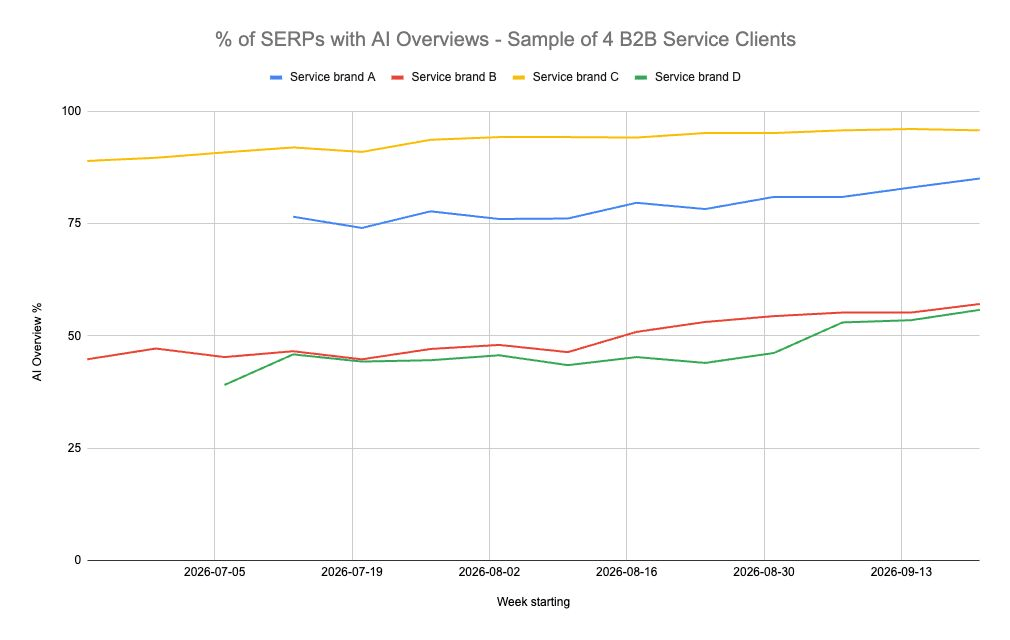
That’s not all though. The presence of AIOs on ecommerce search results has increased from 10% in July to 65% in mid-September for our clients, with one of our clients having AIOs present on 75% of keywords.
The good news is that product visibility hasn’t been pushed down, so the grids that retailers already compete in are still relevant and very prominent. And businesses with strong, optimised product feeds can be cited inside the AI Overview for increased visibility and clicks. But don’t be surprised if you see some temporary drops in CTR on high-intent keywords, as the drop in position for standard organic listings will likely have a knock on effect.
ChatGPT use drops as users turn to other AI engines
Some additional context from Comscore adds to the AI visibility conversation. Between January and June 2026, ChatGPT’s share of AI prompt volume fell from 70% to 50%, while Gemini and Claude gained meaningful share. While ChatGPT still leads the way, the intensifying competition is clear: users are increasingly splitting their prompts across multiple AI platforms. So if you’re monitoring brand mentions in AI answers, it’s worth checking that you’re covering more than just ChatGPT.
Google drops free product listings, putting comparison services front and centre
If you’ve started to notice a reduction in organic shopping clicks and impressions in GSC and Merchant Center across European markets, rest assured it’s not a fault in your strategy. In mid-September, Google Search removed free product listings and carousel formats from the European Economic Area (EEA) in compliance with the Digital Markets Act, resulting in a significant traffic drop almost overnight.
Tracking data from Productrise shows roughly 90-100% drops in unpaid impressions across Germany, France, Belgium, Sweden and the Netherlands, while the UK and US are currently unaffected by the DMA ruling.
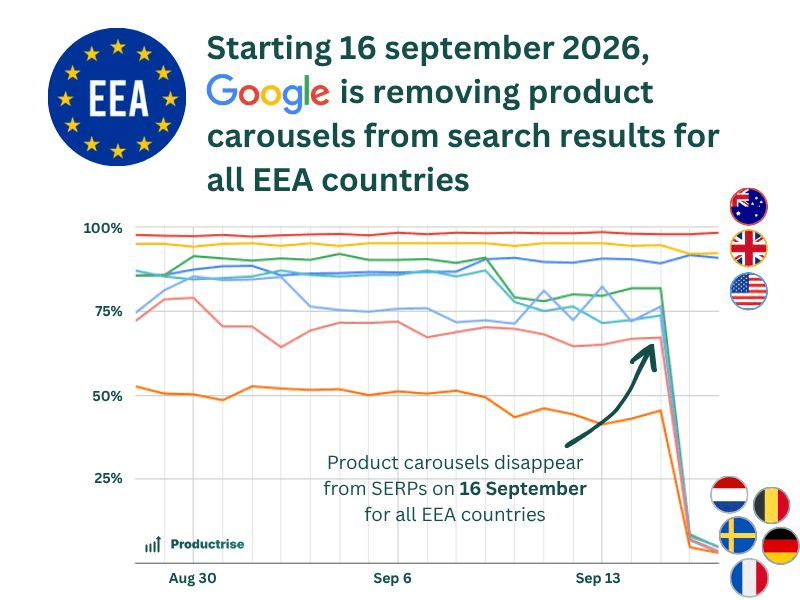
The good news is that businesses affected by the changes can pivot their strategies to regain indirect organic placement through CSS platforms, with price comparison services taking over the space on search engines. Paid shopping ads are also unaffected by the update.
While UK SERPs aren’t affected by the change, it’s definitely one to consider for multi-market businesses and clients.
Category filters offer new insight into search demand
Until recently, SEOs and marketers have had to start with an initial query to explore category-specific trends. But Google Trends’ update changes that. On 2nd September 2026, Google announced the introduction of category filters on the Google Trends Explore page, allowing you to gain a more refined view of search trends, with or without a query.
Applying the filter alongside a query will provide more refined and targeted search trend data within a specific category. But perhaps most useful for SEOs is the ability to broaden search trend research by applying the category filter without a query for a more zoomed-out view of category-level trends.
Here’s how you can use this new feature to your advantage:
- Keyword discovery within a specific category or region, without needing a seed term
- Disambiguating keywords to target the correct contexts, categories, and search intent
- Support content ideation based on emerging topics and search trends
- Enhance local targeting and compare regional demand
YouTube citations may be dropping, but descriptions could be your savior
An interesting post from David Konitzny shows that Reddit isn’t the only platform experiencing a drop in ChatGPT citations. YouTube has joined the club. But that doesn’t mean it’s not still retrieving and using content from YouTube in its answers. Konitzny points out that the video description is the biggest piece of information that ChatGPT can access about the video, making it key to shaping AI answers to common search queries.
His top tip? Treat YouTube video descriptions as a landing page, with structured information, the right key terms, and the answers you need to feature in AIOs.
Google launches pilot to pay publishers for content used in AI answers
A smaller story – but noteworthy nonetheless! Google gave more detail on its ‘AI Contribution Pilot’ which pays publishers when their content meaningfully contributes to an AI response in AI Overviews, AI Mode, or Gemini.
It’s early days, and the group involved is small and skews towards small and midsized publishers, but the full payout mechanics are yet to be made public.
What’s worth noting is that, until now, content being used in these answers has generally meant losing a click and getting nothing in return. Google testing a route that leads to compensation suggests it’s beginning to treat contributions as something with measurable value. For Digital PR specifically, that supports the case that the publications we target are key to how AI answers get built, rather than just being “where the link sits”.
Enjoyed this roundup? Stay updated with the latest organic trends, tips, and exclusive insights by subscribing to our newsletter.
Want cutting-edge digital news and tips straight to your inbox? Sign up to our monthly newsletter here
"*" indicates required fields