AI enters the auction: ChatGPT starts integrating sponsored ads
 Hannah Denning
OpenAI recently announced that they will be testing sponsored adverts in the United States, both for logged in free users and their lowest cost subscription tier, ChatGPT Go. The Plus, Pro, Business and Enterprise subscriptions will continue to benefit from an ad-free service.
Back in May 2024, Sam Altman, CEO of OpenAI, considered ads to be “a last resort” for the company. Fast forward to 2026 and it appears we’ve reached that tipping point.
What’s changed? Well, artificial intelligence is costly to develop and operate, so it makes sense that OpenAI is looking to introduce another sustainable revenue stream, mirroring the path taken by other platforms with a particularly large audience reach. But really, did we ever expect these tools to remain ad free? I suspect even the most optimistic people still took Mr Altman’s words with a heavy pinch of salt.
Let’s take a closer look at what has been announced and what this could mean for advertisers.
What’s been announced?
Open AI will start showing ads on ChatGPT to a limited group of logged-in adult users in the US over the coming weeks. These ads will be clearly labelled, separated from organic responses and appear at the bottom of answers. They have also stated that ads will not be eligible to appear on “sensitive or regulated topics like health, mental health or politics”.
What does this mean for users? Well, OpenAI recognises that users rely on ChatGPT for meaningful and often personal tasks, making user trust absolutely critical. OpenAI states that its mission is to ensure “AGI benefits all of humanity” so any move into advertising is intended to contribute to that. They’ve also made it clear how they will continue to value conversation privacy, and that these will never be sold to advertisers.
What will the ads look like?
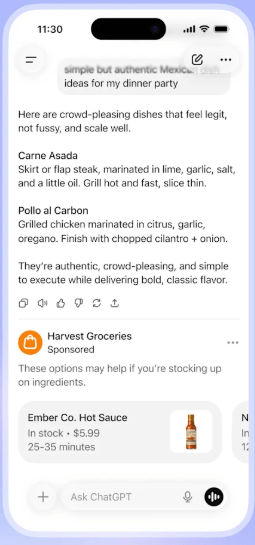
OpenAI also offered a sneak peek at how ads are expected to appear within the platform. Although, as these formats have not yet entered the testing phase, it’s likely that they will evolve over time:
OpenAI
As you can see from the preview, ads in ChatGPT responses will be clearly marked as “sponsored” so that the user can clearly distinguish between an organic answer and paid ad.
OpenAI has stated that it plans to test ads at the bottom of ChatGPT responses – a noticeable contrast to platforms such as Google, where ads typically appear at the top of the search results page, above organic results. This suits the way in which users interact with the tool, which is to engage with the responses from top to bottom, then continue a dialogue further if needed.
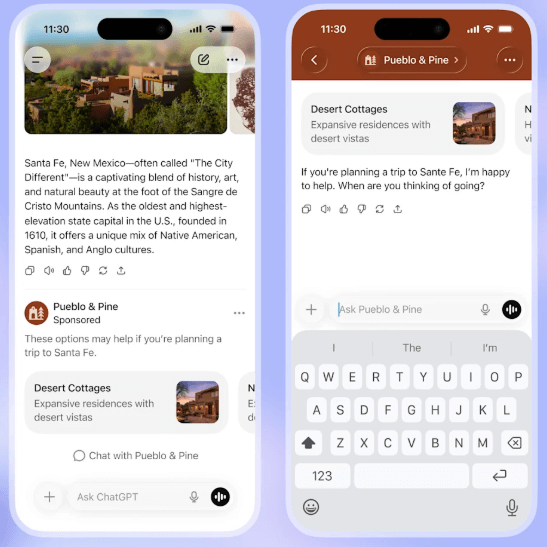
In the future, OpenAI sees the ad experience going even further, aspiring to be “more helpful and relevant than any other ads.” They predict that soon we might see an ad and be able to directly ask the questions needed to make a decision. You can see an example of what this might look like below:
OpenAI
What does this mean for paid advertising?
Platforms that currently take the lion’s share of media spend such as Google Ads are built to capture demand that already exists. Users enter a search query, review the results and click an ad. ChatGPT behaves more like a decision engine than a search engine, where intent is more conversational and exploratory, and this means adverts will also need to fit in accordingly.
To succeed, ChatGPT ads will need to move beyond features, pricing and promotions, placing greater emphasis on problem-solving. Advertisers that clearly explain why their product exists and the specific problems it addresses will be better positioned than those relying on generic benefit messaging.
A key watchpoint will be reporting capabilities. At this stage, there’s no clarity on what metrics (if any) will be available to early adopters, but there will be an expectation of some detail on what’s performing and how to optimise results. It’s also been speculated that OpenAI is planning to charge on a pay-per-impression basis, rather than the traditional pay-per-click model. This is fairly typical for a new ad platform while it finds its feet, however we suspect there will quickly be calls for more flexibility and guarantees over paid for interactions.
Conclusion
The arrival of ads in ChatGPT signals an interesting new chapter for digital advertising, one that may genuinely challenge the duopoly of Google and Meta long term. But for now a couple of big questions remain – how do you opt in, and what level of control will you get over targeting?
As always, we’ll keep you up to date with developments as further announcements are made, so watch this space.
Want cutting-edge digital news and tips straight to your inbox? Sign up to our monthly newsletter here
"*" indicates required fields